


Bearing Oil Grooves and Oil Holes: Functions and Benefits
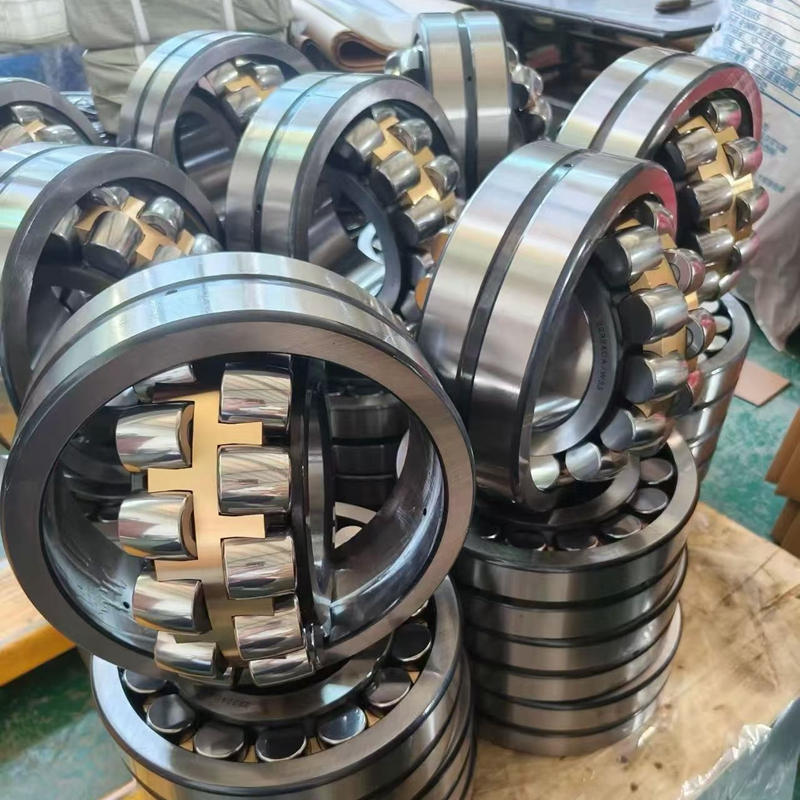
Bearing Oil Grooves and Oil Holes Introduction:
Bearing Oil Grooves and Oil Holes act as the vital arteries of a bearing system. They guide fresh lubricant directly to the internal rolling elements where it is needed most. Lubrication defines the lifespan of your hardware. Without a continuous protective film, harsh metal-to-metal contact occurs. This friction rapidly destroys raceways and creates excess heat. These engineered features ensure consistent flow. Consequently, they preserve performance and prevent costly, premature failures.
Functions of Oil Holes:
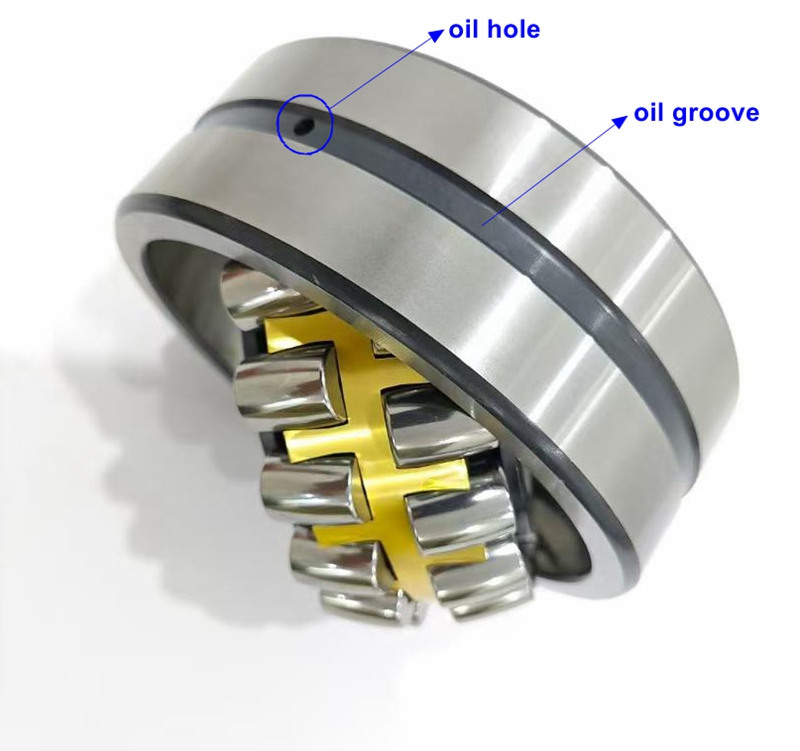
The oil hole serves as the primary entry point for lubrication. Manufacturers typically drill these holes radially through the outer ring (and occasionally the inner ring) of the bearing.
Their function is straightforward but critical. When a technician applies lubricant through a fitting on the housing, the fluid travels through the housing channels and enters the bearing via the oil hole. This creates a direct bridge between the external supply and the internal rolling elements. Without this direct path, fresh lubricant cannot easily displace old, contaminated grease, which often leads to “lubrication starvation.”
Functions of Oil Grooves:
While the hole admits the lubricant, the oil groove manages its distribution. An oil groove is a circumferential channel machined into the surface of the bearing ring, usually intersecting with the oil hole.
Bearing oil groove performs three essential tasks:
- Circulation: It allows the lubricant to flow around the entire circumference of the bearing. This ensures that the oil reaches all rolling elements, regardless of the bearing’s load zone or orientation.
- Cooling: Friction generates heat. A continuous flow of oil through the groove absorbs this heat and carries it away from the contact zones, helping the bearing run cooler.
- Flushing: The flow helps flush out microscopic debris and contaminants, pushing them away from the sensitive raceways.
Key Benefits:
Integrating oil holes and grooves into bearing design provides immediate operational advantages:
- Extended Service Life: By ensuring a consistent hydrodynamic film, these features significantly reduce wear and fatigue.
- Simplified Maintenance: Maintenance teams can relubricate bearings while the machinery runs, avoiding costly downtime.
- Thermal Stability: Improved heat dissipation allows bearings to operate at higher speeds without overheating.
Conclusion:
Oil grooves and oil holes are not mere details; they are essential engineering solutions. They transform a bearing from a static component into a dynamic system that self-regulates heat and friction. By selecting bearings with these features, operators maximize machinery efficiency and ensure long-term reliability.
Questions buyers still ask while reviewing Bearing Oil Grooves and Oil Holes: Functions and Benefits
Which next options usually help after reviewing Bearing Oil Grooves and Oil Holes: Functions and Benefits?
Most buyers benefit from one broader family destination, one more commercial route, and one supporting guide that answers the next practical question. That combination usually turns research into a clearer shortlist.
Why add related bearing destinations beside Bearing Oil Grooves and Oil Holes: Functions and Benefits?
Because the first answer often leads to a second question about fit, applications, supplier choice, or repeat-order confidence. Keeping those next destinations close reduces unnecessary backtracking.
When is it worth moving from reading into a quote or product review?
That move usually makes sense once the topic has narrowed the likely bearing family and the remaining unknowns are commercial, dimensional, or application-specific rather than purely educational.
What usually makes the next bearing decision easier after Bearing Oil Grooves and Oil Holes: Functions and Benefits?
The process is often easier when the wider family view, the more commercial destination, and one practical guide stay visible together. That keeps the decision grounded in both application detail and buying reality.
Buyer FAQ
Questions buyers ask before choosing the next bearing option
What is the main takeaway from Bearing Oil Grooves and Oil Holes: Functions and Benefits?
The main takeaway is that bearing oil grooves and oil holes: functions and benefits should be checked against the bearing family, dimensions, load direction, speed, and operating conditions instead of relying on the title or size alone.
When should I use this guide before requesting a quote?
Use the guide when you are comparing bearing models, checking suffix meanings, confirming seal or clearance choices, planning maintenance, or preparing details for replacement, production, or OEM sourcing.
How does this topic connect to bearing supply?
The topic supports the Bearing Supply decision path by helping buyers understand fit, performance, specification details, or maintenance factors before choosing a product page or contacting the team.
Can this guide replace a final specification check?
No. The guide helps prepare the decision, but a final check should still confirm the part number, dimensions, load, speed, seal, clearance, precision, application, and order quantity.
What should I send if I need help after reading this guide?
Send the bearing number, measured size, photos if available, application, quantity, and any special operating conditions. That gives the team enough context to recommend the right product family or quote route.
Need help checking fit, price, or lead time? Request a bearing quote