


Bearing Rings Manufacturing Steps
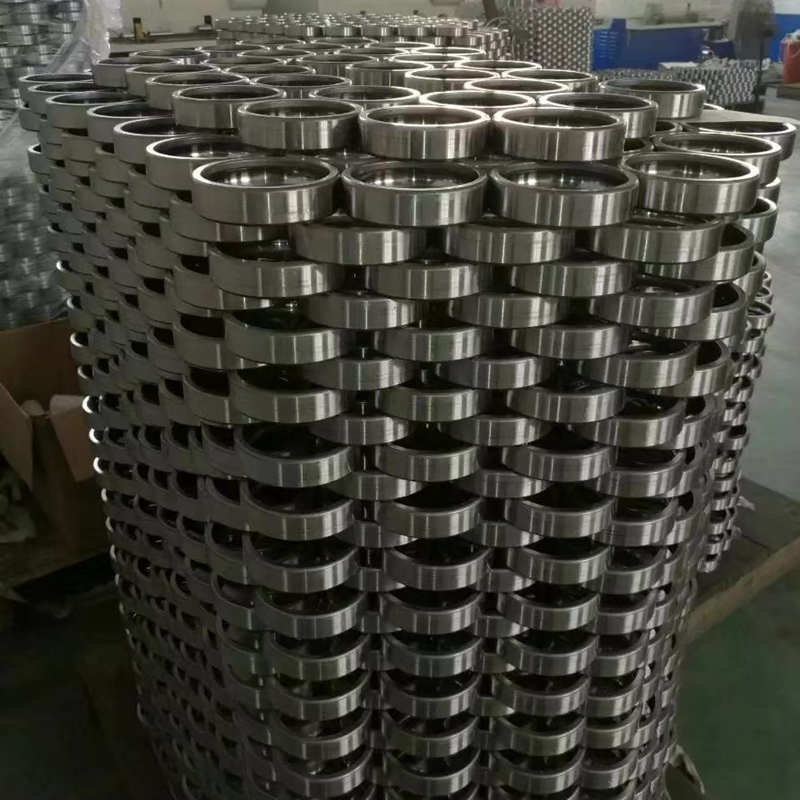
Bearing Rings’ Importance:
Bearing rings are important parts of bearings, and their function is also very important.
Due to the wide variety of rolling bearings, as a resultl the ring size, structure, manufacturing equipment, and process methods of different types of bearings are different.
Due to the complicated processing procedures and high machining accuracy requirements, the processing quality of bearing rings will influence bearings accuracy, service life and performance.
Manufacturing Steps:
1. Forging
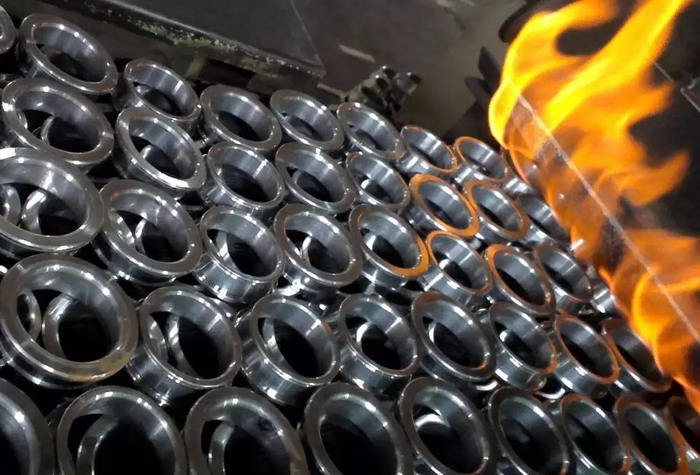
The toughness and strength of the ferrule will reduce if overburning, overheating, internal cracking into a network of carbides are produced during the forging process.
Therefore, it is necessary to strictly control the processing temperature, cyclic heating and heat dissipation conditions after forging (such as spray cooling), etc.
Especially after the final forging of larger varieties of ferrules, the temperature is above 700 ℃, and shall not be stacked.
2. Heat treatment
Close monitoring of heat treatment equipment is an important job in the workshop. Monitor the reliability of the equipment. Important temperature control instruments such as meters and thermocouples must be closely monitored to ensure that the measurement data is accurate and reliable. Those with excessive errors must be replaced in time, and operation with diseases is strictly prohibited.
3. Monitoring of grinding process
The finished imported bearing rings are not allowed to have grinding burns and grinding cracks, especially on the mating surface of the inner ring screwdriver.
If the ferrule is pickled, it should be fully inspected to remove the burned product.
If it is severely burned, it should not be repaired or repaired unqualified should be scrapped. Ferrules with grinding burns are not allowed to enter the assembly process.

4. Marking management
Every process must be strictly managed after the steel is put into storage and before the ferrule is ground.
GCR15 and GCR15SIMN two different materials must be strictly distinguished.
Rings Installation Method:
When installing the bearing ring, pay special attention to the installation sequence.
For precision bearings, pay attention to the positive and negative ends.
Reverse installation will cause dynamic imbalance and affect the performance of bearings.
The axial positioning of super-precision angular contact ball bearings usually uses a lock nut or an end cover. These components require high geometric accuracy and good mechanical strength to provide stable support and positioning.
The tightening torque Mt of precision lock nuts or end cap bolts must be large enough to ensure that all components (including bearings) are positioned without deformation and damage.
Questions that usually come up after Bearing Rings Manufacturing Steps
Which next options usually help after reviewing Bearing Rings Manufacturing Steps?
Most buyers benefit from one broader family destination, one more commercial route, and one supporting guide that answers the next practical question. That combination usually turns research into a clearer shortlist.
Why add related bearing destinations beside Bearing Rings Manufacturing Steps?
Because the first answer often leads to a second question about fit, applications, supplier choice, or repeat-order confidence. Keeping those next destinations close reduces unnecessary backtracking.
When is it worth moving from reading into a quote or product review?
That move usually makes sense once the topic has narrowed the likely bearing family and the remaining unknowns are commercial, dimensional, or application-specific rather than purely educational.
What usually makes the next bearing decision easier after Bearing Rings Manufacturing Steps?
The process is often easier when the wider family view, the more commercial destination, and one practical guide stay visible together. That keeps the decision grounded in both application detail and buying reality.
Buyer FAQ
Questions buyers ask before choosing the next bearing option
What is the main takeaway from Bearing Rings Manufacturing Steps?
The main takeaway is that bearing rings manufacturing steps should be checked against the bearing family, dimensions, load direction, speed, and operating conditions instead of relying on the title or size alone.
When should I use this guide before requesting a quote?
Use the guide when you are comparing bearing models, checking suffix meanings, confirming seal or clearance choices, planning maintenance, or preparing details for replacement, production, or OEM sourcing.
How does this topic connect to bearing supply?
The topic supports the Bearing Supply decision path by helping buyers understand fit, performance, specification details, or maintenance factors before choosing a product page or contacting the team.
Can this guide replace a final specification check?
No. The guide helps prepare the decision, but a final check should still confirm the part number, dimensions, load, speed, seal, clearance, precision, application, and order quantity.
What should I send if I need help after reading this guide?
Send the bearing number, measured size, photos if available, application, quantity, and any special operating conditions. That gives the team enough context to recommend the right product family or quote route.
Need help checking fit, price, or lead time? Request a bearing quote