


Ball Screws Common Faults and Solutions
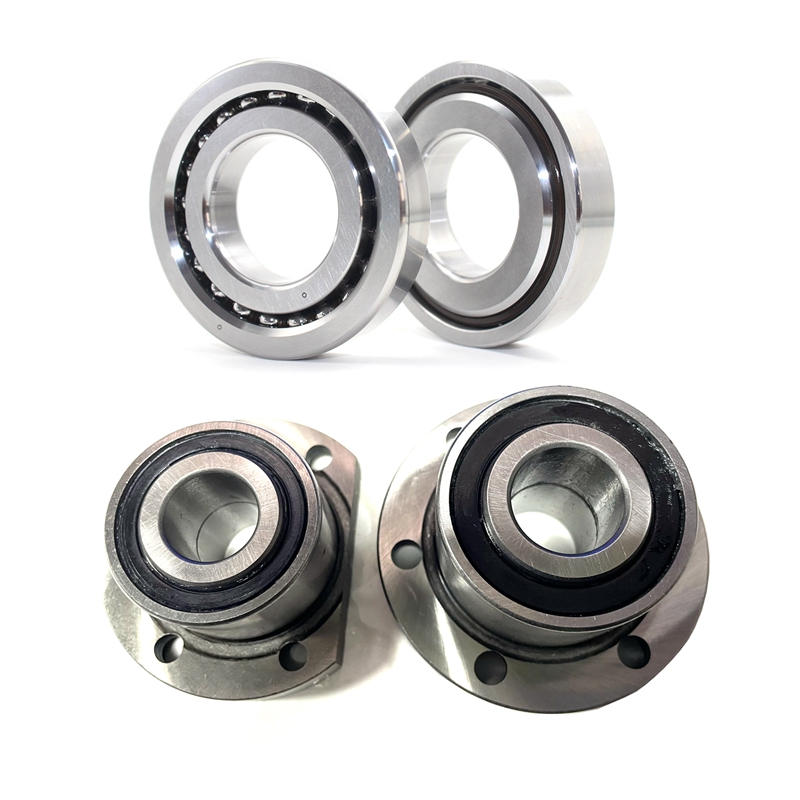
Ball Screws Brief Introduction:
Ball screws are ideal products to convert rotary motion into linear motion, or convert linear motion into rotary motion.
Because of its small frictional resistance, as a result, ball screws (for example ZKLN 3062.2RS) are widely used in various industrial equipment and precision instruments.
A ball screw contains a screw, a nut, a steel ball, a pre-compression piece, a reverser, and a dustproof device.
Ball Screw Features:
1. Low friction loss and high transmission efficiency
2. High precision
3. High-speed feed and micro feed are possible
4. High axial rigidity
5. It cannot be self-locked and has the reversibility of transmission
Applications:
① For Ultra-high DN value ball bearings, applications are as below:
high-speed machine tools, high-speed integrated machining centers
② For End cover ball bearings, applications are as below:
fast handling systems, general industrial machinery, automated machinery and so on
③ For High-speed ball bearings, applications are as below:
CNC machinery, precision machine tools, industrial machinery, electronic machinery, high-speed machinery
④ For Precision ground ball bearings, applications are as below:
CNC machinery, precision machine tools, industrial machinery, electronic machinery, conveying machinery, aerospace industry, other actuators used in antennas, valve switch devices, etc.
⑤ For Nut rotary (R1) series ball bearings, applications are as below:
semiconductor machinery, industrial robots, woodworking machines, laser processing machines, conveying devices and so on
⑥ For Heavy-duty ball bearings, applications are as below:
all-electric injection molding machines, presses, semiconductor manufacturing equipment, heavy-duty brakes, industrial machinery, forging machinery, etc.
Common Faults and Solutions for Ball Screw:
1. Phenomenon: high roughness value of processed parts
Solution: add lubricating oil to eliminate lubrication failure
2. Phenomenon: the ball screw is partially napped or damaged
Solution: replace or repair the screw
3. Phenomenon: the screw bearing stops work and the movement is not stable
Solution: Replace damaged bearings
4. Phenomenon: the servo motor is not adjusted well, and the gain is too large
Solution: adjust the servo motor control system
5. Phenomenon: large reverse error, unstable machining accuracy
Solution: re-tighten and repeat the test with a dial indicator
6. Phenomenon: the screw shaft slide plate is too tight or too loose with the pressure plate
Solution: re-adjust or study, use 0.03mm ruler to fail as qualified
7. Phenomenon: the screw shaft slide plate is too tight or too loose with the wedge iron
Solution: re-adjust or study to make the contact rate reach more than 70%, and use the 0.03mm ruler
8. Phenomenon: the pre-tightening force of the ball screw is too tight or too loose
Solution: Adjust the pre-tightening force and check the axial movement value, so that the error is not greater than 0.015mm
9. Phenomenon: the end face of the ball screw nut is not perpendicular to the joint surface, and the joint is too loose
Solution: repair, adjust or add pad treatment
10. Phenomenon: the pre-tightening force of the screw support bearing is too tight or too loose
Solution: repair and adjust
11. Phenomenon: large manufacturing error or axial movement of the ball screw
Solution: use the control system to automatically compensate to eliminate the gap, use the instrument to measure and adjust the screw movement
Contact Us:
If you have any questions about Ball Screws Common Faults and Solutions, pls feel free to contact us !
Questions buyers still ask while reviewing Ball Screws Common Faults and Solutions
Which next options usually help after reviewing Ball Screws Common Faults and Solutions?
Most buyers benefit from one broader family destination, one more commercial route, and one supporting guide that answers the next practical question. That combination usually turns research into a clearer shortlist.
Why add related bearing destinations beside Ball Screws Common Faults and Solutions?
Because the first answer often leads to a second question about fit, applications, supplier choice, or repeat-order confidence. Keeping those next destinations close reduces unnecessary backtracking.
When is it worth moving from reading into a quote or product review?
That move usually makes sense once the topic has narrowed the likely bearing family and the remaining unknowns are commercial, dimensional, or application-specific rather than purely educational.
What usually makes the next bearing decision easier after Ball Screws Common Faults and Solutions?
The process is often easier when the wider family view, the more commercial destination, and one practical guide stay visible together. That keeps the decision grounded in both application detail and buying reality.
Buyer FAQ
Questions buyers ask before choosing the next bearing option
What is the main takeaway from Ball Screws Common Faults and Solutions?
The main takeaway is that ball screws common faults and solutions should be checked against the bearing family, dimensions, load direction, speed, and operating conditions instead of relying on the title or size alone.
When should I use this guide before requesting a quote?
Use the guide when you are comparing bearing models, checking suffix meanings, confirming seal or clearance choices, planning maintenance, or preparing details for replacement, production, or OEM sourcing.
How does this topic connect to precision / spindle bearings?
The topic supports the Precision / Spindle Bearings decision path by helping buyers understand fit, performance, specification details, or maintenance factors before choosing a product page or contacting the team.
Can this guide replace a final specification check?
No. The guide helps prepare the decision, but a final check should still confirm the part number, dimensions, load, speed, seal, clearance, precision, application, and order quantity.
What should I send if I need help after reading this guide?
Send the bearing number, measured size, photos if available, application, quantity, and any special operating conditions. That gives the team enough context to recommend the right product family or quote route.
Need help checking fit, price, or lead time? Request a bearing quote