


Bearing Materials
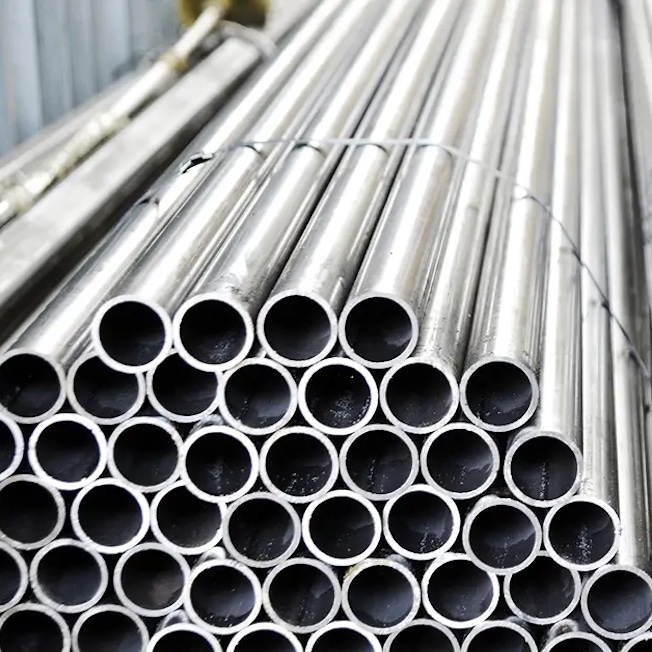
Bearing Materials Introduction:
Bearing materials include materials for bearing rings, rolling elements, cages and seals. In this article, however, we will focus specifically on the materials used for bearing rings. In the following section, we will examine bearing steel SAE 52100 as well as stainless steels such as AISI 440C, AISI 316, and AISI 304.
Bearing Steel (SAE 52100/ AISI 52100)
The most widely used material for ball bearings, roller bearings, and tapered roller bearings is chrome steel, specifically SAE 52100 bearing steel. This high-carbon steel, typically containing around 1.5% carbon, achieves a Rockwell hardness of approximately 60–64 HRC. Chrome steel bearings can operate at temperatures up to 120°C under normal conditions, but with appropriate heat treatment, their temperature tolerance can be extended to over 220°C. While chrome steel offers excellent wear resistance, its relatively low chromium content makes it vulnerable to corrosion. To prevent oxidation, the bearing surfaces should be protected either with a wear-resistant coating or by maintaining a fluid film.
Bearing Materials – Bearing Steel Chemical Composition Based on Country of Origin
| Designation Country | Carbon (C%) | Silicon (Si%) | Manganese (Mn%) | Phosphorous (P%) | Chromium (Cr%) | Molybdenum (Mo%) | Nickel (Ni%) | Sulfur (S%) |
|---|---|---|---|---|---|---|---|---|
| AISI 52100 USA | 0.95–1.1 | 0.15–0.35 | 0.5 max | 0.012 max | 1.3–1.6 | 0.08 max | 0.25 max | 0.25 max |
| 100Cr6 Germany | 0.95–1.1 | 0.15–0.35 | 0.25–0.45 | 0.03 max | 1.35–1.65 | 0.1 max | – | 0.2 max |
| AISI 440C USA | 0.95–1.2 | 1.0 max | 1.0 max | 0.04 max | 16–18 | 0.75 max | 0.25 max | 0.3 max |
Stainless Steels
Stainless steel is commonly used for bearing components due to its superior resistance to surface corrosion, which is primarily attributed to its higher chromium content—typically around 18%—along with the addition of nickel. The presence of chromium enables the formation of a thin, stable layer of chromium oxide when exposed to oxygen, known as a passive film. This protective layer acts as a barrier, preventing further oxidation and significantly enhancing the bearing’s durability in corrosive environments. The addition of nickel further improves corrosion resistance and toughness, making stainless steel bearings ideal for applications where moisture, chemicals, or other corrosive agents are present.
Martensitic Stainless Steel – AISI 440C
Primary Composition: High carbon (typically 0.95-1.2%) and high chromium (16-18%), making it hardenable and wear-resistant.
400 series stainless steels have a high enough carbon content to be hardened up to Rc58 using standard heat treatment. However, bearings made from this material have about 20% lower load capacity compared to 52100 chrome steel bearings due to their lower hardness. These components are magnetic, and 440C stainless steel offers good corrosion resistance in fresh water and mild chemical environments, making it a popular choice among US bearing manufacturers.
Miniature bearings using conventional 440C can be slightly noisy because large carbides exposed during finishing tend to concentrate at grain boundaries, though this is less of an issue in larger bearings. 400 series stainless steel bearings can operate continuously at temperatures up to 250°C and are generally more expensive than chrome steel bearings.
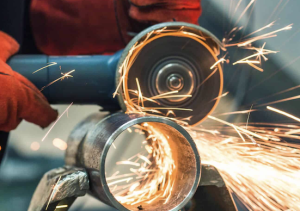
Chemical Composition of Stainless Steel AISI 440C
| Designation Country | C% Carbon | Si% Silicon | Mn% Manganese | P% Phosphorous | Cr% Chromium | Mo% Molybdenum | Ni% Nickel | S% Sulfur |
|---|---|---|---|---|---|---|---|---|
| AISI 440C USA | .95-1.2 | 1.0 max | 1.0 max | .04 max | 16-18 | .75 max | .25 max | 0.3 max |
| SUS440C Japan | .95-1.2 | 1.0 max | 1.0 max | .04 max | 16-18 | .75 max | .25 max | 0.3 max |
| 9Cr18 China | .90-1.05 | .75 max | .75 max | .035 max | 16-19 | .75 max | .23 max | 0.3 ma |
Austenitic Stainless Steel – AISI316
Primary Composition: Contains 17.5% chromium, 12.5% nickel, and 2.5% molybdenum.
Bearings manufactured from 300 series stainless steel offer excellent corrosion resistance and are inherently non-magnetic due to their low carbon content. However, this material cannot be hardened through conventional heat treatment, which limits its suitability to applications involving low loads and moderate speeds. The surfaces of these bearings undergo a passivation process, where a thin, protective oxide layer forms upon exposure to oxygen, effectively shielding the bearing from corrosive elements.
The corrosion resistance of 300 series stainless steel is particularly effective in environments where the bearing is exposed to moisture or mild chemicals, but it is not ideally suited for continuous submersion in liquids, such as underwater applications. Bearings made from this material are typically custom or special-order products, often requiring minimum order quantities, and they tend to be more expensive than standard bearing options.
Austenitic Stainless Steel – AISI 304
Primary Composition: Contains 18% chromium and 8% nickel.
AISI 304 is one of the most common grades of austenitic stainless steel, characterized by its high chromium (about 18%) and nickel (about 8%) content. This composition gives it excellent corrosion resistance, good formability, and a non-magnetic nature in the annealed condition. Austenitic stainless steels, including 304, are widely used in various industries due to these properties.
Bearings manufactured from AISI 304 stainless steel are valued for their excellent corrosion resistance and non-magnetic properties, making them suitable for a wide range of applications where exposure to moisture or mild chemicals is a concern. As a member of the austenitic stainless steel family, AISI 304 contains high levels of chromium and nickel, which contribute to its ability to withstand oxidation and prevent rust formation.
Comparison of AISI 440C, AISI 316, and AISI 304 Stainless Steels
Compared to AISI 316 stainless steel, AISI 304 offers similar mechanical properties but slightly lower resistance to chlorides and more aggressive chemicals, as AISI 316 contains added molybdenum for enhanced corrosion protection in harsh environments. While both grades are non-magnetic and cannot be hardened by heat treatment, AISI 304 is generally more cost-effective, making it a popular choice for less demanding corrosive environments.
In contrast, AISI 440C stainless steel is a martensitic grade that can be heat treated to achieve high hardness and excellent wear resistance, making it ideal for high-load and high-speed bearing applications. However, 440C is more susceptible to corrosion than 304 and 316, especially in moist or chemical-rich environments, and is magnetic due to its higher carbon content.
Questions that help before the next bearing decision after Bearing Materials
Which next options usually help after reviewing Bearing Materials?
Most buyers benefit from one broader family destination, one more commercial route, and one supporting guide that answers the next practical question. That combination usually turns research into a clearer shortlist.
Why add related bearing destinations beside Bearing Materials?
Because the first answer often leads to a second question about fit, applications, supplier choice, or repeat-order confidence. Keeping those next destinations close reduces unnecessary backtracking.
When is it worth moving from reading into a quote or product review?
That move usually makes sense once the topic has narrowed the likely bearing family and the remaining unknowns are commercial, dimensional, or application-specific rather than purely educational.
What usually makes the next bearing decision easier after Bearing Materials?
The process is often easier when the wider family view, the more commercial destination, and one practical guide stay visible together. That keeps the decision grounded in both application detail and buying reality.
Buyer FAQ
Questions buyers ask before choosing the next bearing option
What is the main takeaway from Bearing Materials?
The main takeaway is that bearing materials should be checked against the bearing family, dimensions, load direction, speed, and operating conditions instead of relying on the title or size alone.
When should I use this guide before requesting a quote?
Use the guide when you are comparing bearing models, checking suffix meanings, confirming seal or clearance choices, planning maintenance, or preparing details for replacement, production, or OEM sourcing.
How does this topic connect to bearing supply?
The topic supports the Bearing Supply decision path by helping buyers understand fit, performance, specification details, or maintenance factors before choosing a product page or contacting the team.
Can this guide replace a final specification check?
No. The guide helps prepare the decision, but a final check should still confirm the part number, dimensions, load, speed, seal, clearance, precision, application, and order quantity.
What should I send if I need help after reading this guide?
Send the bearing number, measured size, photos if available, application, quantity, and any special operating conditions. That gives the team enough context to recommend the right product family or quote route.
Need help checking fit, price, or lead time? Request a bearing quote