


Why Shouldn’t Bearings Be Filled With Too Much Grease
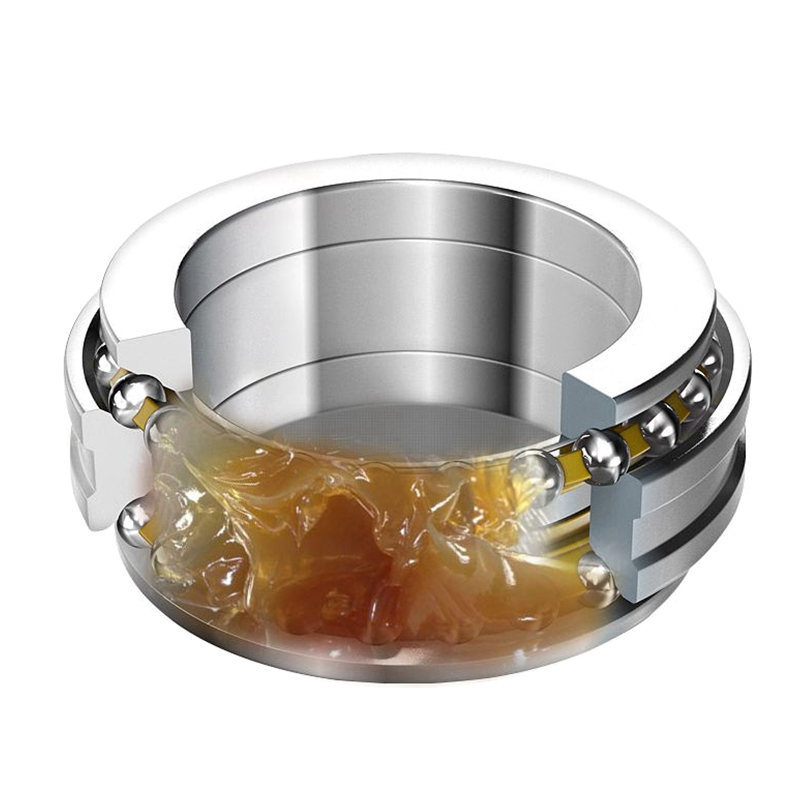
Why Shouldn’t Bearings Be Filled With Too Much Grease?
Why shouldn’t bearings be filled with too much grease?
Grease has good adhesion, wear resistance, temperature resistance, rust resistance and lubricity, which can improve high temperature oxidation resistance and delay aging.
At the same time, it can dissolve carbon deposits, prevent the accumulation of metal wear debris and oil stains, and improve the wear resistance, pressure resistance and corrosion resistance of the machine.
The more grease, the greater the friction torque. With the same filling amount, the friction torque of the sealed bearing is greater than that of the open bearing.
After the grease filling amount is equivalent to 60% of the internal space volume of the bearing, the friction torque no longer increases significantly.
Bearing Temperature Increase
With the increase of the grease filling, the temperature rise of the bearing increases linearly.
With the same filling amount, the temperature rise of the sealed bearing is higher than that of the open bearing.
The increase in temperature during operation causes sealing problems, increases energy consumption, and is not good for the grease itself. For example, if the motor bearings are with too much grease, the power consumption will increase. Moreover, in serious cases, it will cause the motor to malfunction.
Grease Oxidize Faster
The increase in bearing temperature will also cause the grease to oxidize faster (premature deterioration and shortened service life). The increase in temperature causes the base oil contained in the grease to accelerate the precipitation, and grease play a lubricating effect is mainly because of the oil in it.
After the base oil is lost from the grease, the thickening agent is left, which will dry and harden, causing the newly added grease to not fully flow to the bearing core, resulting in poor lubrication. As a result, there will be bearing wear and even failure.
In addition, hard blocks of dry grease may fall off, break, and then come into the bearing.
Cause Sealing Problems
Too much grease will also cause sealing problems. The pressure on the seals will increase, which will cause the seal to rupture and fail, resulting in a weak seal, introducing impurities and permeable water, and causing damage to the bearing.
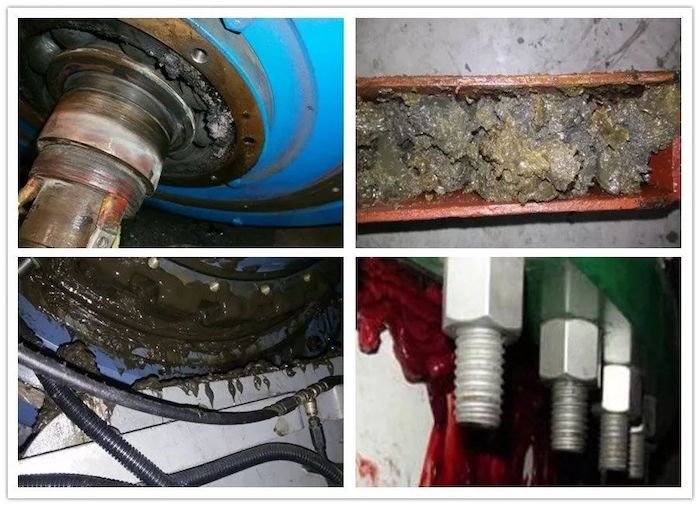
To sum up, grease filling amount of sealed rolling bearings should not exceed about 50% of the internal space at most.
Shawki and Mokhtar’s tests show that 25% to 35% amount grease of the ball bearing is the most suitable.
How To Ensure The Proper Lubrication?
Proper lubrication and regular maintenance can avoid bearing damage caused by lubrication problems.
In order to ensure the proper lubrication, we should follow the below points.
1. Follow the instructions set by the device manufacturer for each device
2. When adding grease, it should be filled between the rolling parts of the bearing and the housing (or retainer) to ensure that sufficient grease enters and the key raceway surface is fully lubricated
3. Pay attention to when the bearing should be greased (Re-lubrication)
4. Monitor the indicating instruments of the equipment so as to detect signs of problems as early as possible, such as temperature fluctuations and/or abnormal high temperatures
5. Pay attention to equipment noise or abnormal vibration
6. Observe lubricating oil leakage
7. Regularly sample the lubricating oil and check for contamination
Questions that help before the next bearing decision after Why Shouldn’t Bearings Be Filled With Too Much Grease
Which next options usually help after reviewing Why Shouldn’t Bearings Be Filled With Too Much Grease?
Most buyers benefit from one broader family destination, one more commercial route, and one supporting guide that answers the next practical question. That combination usually turns research into a clearer shortlist.
Why add related bearing destinations beside Why Shouldn’t Bearings Be Filled With Too Much Grease?
Because the first answer often leads to a second question about fit, applications, supplier choice, or repeat-order confidence. Keeping those next destinations close reduces unnecessary backtracking.
When is it worth moving from reading into a quote or product review?
That move usually makes sense once the topic has narrowed the likely bearing family and the remaining unknowns are commercial, dimensional, or application-specific rather than purely educational.
What usually makes the next bearing decision easier after Why Shouldn’t Bearings Be Filled With Too Much Grease?
The process is often easier when the wider family view, the more commercial destination, and one practical guide stay visible together. That keeps the decision grounded in both application detail and buying reality.
Buyer FAQ
Questions buyers ask before choosing the next bearing option
What is the main takeaway from Why Shouldn’t Bearings Be Filled With Too Much Grease?
The main takeaway is that why shouldn't bearings be filled with too much grease should be checked against the bearing family, dimensions, load direction, speed, and operating conditions instead of relying on the title or size alone.
When should I use this guide before requesting a quote?
Use the guide when you are comparing bearing models, checking suffix meanings, confirming seal or clearance choices, planning maintenance, or preparing details for replacement, production, or OEM sourcing.
How does this topic connect to bearing supply?
The topic supports the Bearing Supply decision path by helping buyers understand fit, performance, specification details, or maintenance factors before choosing a product page or contacting the team.
Can this guide replace a final specification check?
No. The guide helps prepare the decision, but a final check should still confirm the part number, dimensions, load, speed, seal, clearance, precision, application, and order quantity.
What should I send if I need help after reading this guide?
Send the bearing number, measured size, photos if available, application, quantity, and any special operating conditions. That gives the team enough context to recommend the right product family or quote route.
Need help checking fit, price, or lead time? Request a bearing quote