


What is Heat Treatment of Bearings
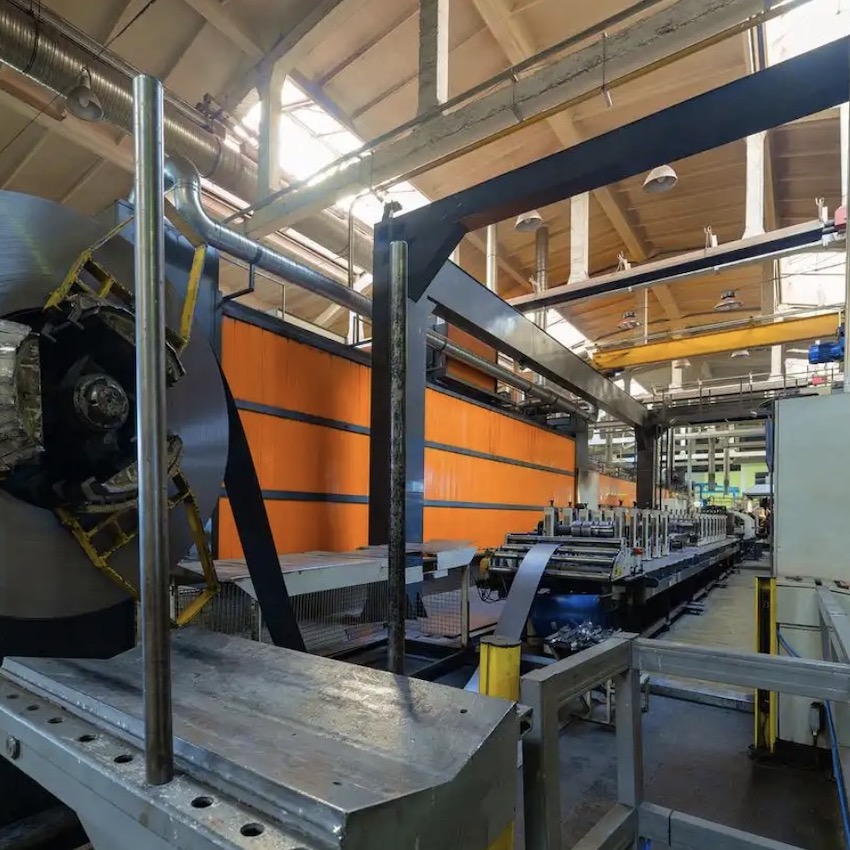
Machining Process Flow of Bearing Rings
Before discussing the heat treatment of bearings, it is important to first understand the basic machining process of bearing rings. The manufacturing process of bearing rings is complex. It involves many steps. The process usually starts with hot-rolled, non-annealed bar stock. The material is first forged into blanks. Then, it goes through normalizing and spheroidizing annealing. These steps prepare the material for later machining.
Next, the rings are turned on a lathe. After turning, heat treatment is performed. This is followed by rough grinding, fine grinding, and precision finishing of the working surfaces. These steps produce the finished bearing ring. If hot-rolled and annealed bar stock is used, turning can begin directly.
Every step in the process is important. Each one affects the final quality of the product.
A typical process flow is as follows:
Begin by preparing the raw materials, followed by forging the blanks. Next, conduct spheroidizing annealing to enhance the material structure. After annealing, proceed with machining operations. Then, perform heat treatment, cryogenic treatment, and low-temperature tempering. Finally, grind the rings to achieve the finished product.
Heat Treatment Process for Bearing Rings
(1) Key Points of Heat Treatment
Hardness Requirements:
For materials like GCr15 and GCr15SiMn, the hardness should reach 61–65 HRC. For critical bearing rings, the required hardness is 58–64 HRC.
Microstructure:
The goal is to obtain uniform tempered martensite. Fine carbide particles should be evenly distributed. This ensures good overall material performance.
Deformation Control:
Deformation must be carefully controlled during heat treatment. Strict process requirements help keep part dimensions accurate.
Stabilization Treatment:
This step removes grinding stress and stabilizes the structure. It also improves size stability of bearing parts. Usually, low-temperature treatment is used. The rings are heated to 120–160°C and held for 3–4 hours.
(2) Detailed Heat Treatment Processes and Standards
Spheroidizing Annealing:
This is a preparatory heat treatment step. Its purpose is to improve the shape of the original pearlite. This increases the material’s strength and toughness. Different spheroidizing annealing methods can be chosen based on part size, structure, and technical requirements. Common methods include regular spheroidizing annealing, isothermal spheroidizing annealing, and rapid spheroidizing annealing. The process is usually done in box furnaces, pit furnaces, or trolley furnaces. For large batches, pusher furnaces or large special annealing furnaces are recommended.
Stress Relief Annealing and Recrystallization Annealing:
These processes remove residual stresses from machining and cold working. They also eliminate work hardening caused by cold rolling, drawing, or stamping. The exact process depends on the material. For example, for GCr15 steel, recrystallization annealing is done at 670–720°C for 2–8 hours.
In bearing ring production, isothermal spheroidizing annealing is often used. This method is fast and gives good results. The annealing curve is very important for improving the quality and performance of bearing rings. During heat treatment of bearing rings, quenching and tempering are critical steps. Various heating equipment can be used, such as continuous mesh belt furnaces, vibrating bottom furnaces, and pusher furnaces. These often use protective atmospheres like nitrogen to improve efficiency. The basic process includes loading, cleaning, drying, heating, cooling, re-cleaning, and tempering. Rings are transferred to the heating and tempering furnaces by elevators. Periodic box furnaces, salt bath furnaces, and medium-frequency induction furnaces can also be used.
Heat Treatment Quality Inspection for Bearing Rings
The standards for heat treatment quality inspection of bearing rings are detailed in the table below.
| Inspection Items | Technical Requirements | Inspection Methods |
| Hardness | 61-65HRC | Use a Rockwell hardness tester or microhardness tester to check hardness |
| Microstructure | Fine needle-like or small crystalline martensite, with uniformly distributed fine residual carbides and a small amount of retained austenite | Observe under 500x magnification after etching with 4% nitric acid alcohol solution |
| Fracture Surface | The fracture surface after quenching should be bright gray and porcelain-like, with fine grains and a shiny luster; underheating or overheating is not allowed | After breaking, inspect the fracture surface with the naked eye or a magnifying glass |
| Cracks and Other Defects | No cracks, decarburization, soft spots, or other defects are permitted | Check for soft spots and decarburization using cold acid etching; measure depth by metallographic method. Inspect for cracks using ultrasonic or magnetic particle testing |
| Deformation (Ovality, Warping, Expansion/Contraction) | Must comply with process or drawing requirements | Use an outer diameter gauge and ovality meter to check for expansion/contraction. Measure warping with a G803 instrument |
Questions buyers still ask while reviewing What is Heat Treatment of Bearings
Which next options usually help after reviewing What is Heat Treatment of Bearings?
Most buyers benefit from one broader family destination, one more commercial route, and one supporting guide that answers the next practical question. That combination usually turns research into a clearer shortlist.
Why add related bearing destinations beside What is Heat Treatment of Bearings?
Because the first answer often leads to a second question about fit, applications, supplier choice, or repeat-order confidence. Keeping those next destinations close reduces unnecessary backtracking.
When is it worth moving from reading into a quote or product review?
That move usually makes sense once the topic has narrowed the likely bearing family and the remaining unknowns are commercial, dimensional, or application-specific rather than purely educational.
What usually makes the next bearing decision easier after What is Heat Treatment of Bearings?
The process is often easier when the wider family view, the more commercial destination, and one practical guide stay visible together. That keeps the decision grounded in both application detail and buying reality.
Buyer FAQ
Questions buyers ask before choosing the next bearing option
What is the main takeaway from What is Heat Treatment of Bearings?
The main takeaway is that what is heat treatment of bearings should be checked against the bearing family, dimensions, load direction, speed, and operating conditions instead of relying on the title or size alone.
When should I use this guide before requesting a quote?
Use the guide when you are comparing bearing models, checking suffix meanings, confirming seal or clearance choices, planning maintenance, or preparing details for replacement, production, or OEM sourcing.
How does this topic connect to bearing supply?
The topic supports the Bearing Supply decision path by helping buyers understand fit, performance, specification details, or maintenance factors before choosing a product page or contacting the team.
Can this guide replace a final specification check?
No. The guide helps prepare the decision, but a final check should still confirm the part number, dimensions, load, speed, seal, clearance, precision, application, and order quantity.
What should I send if I need help after reading this guide?
Send the bearing number, measured size, photos if available, application, quantity, and any special operating conditions. That gives the team enough context to recommend the right product family or quote route.
Need help checking fit, price, or lead time? Request a bearing quote