


How to Prevent Grease Washout in Bearings
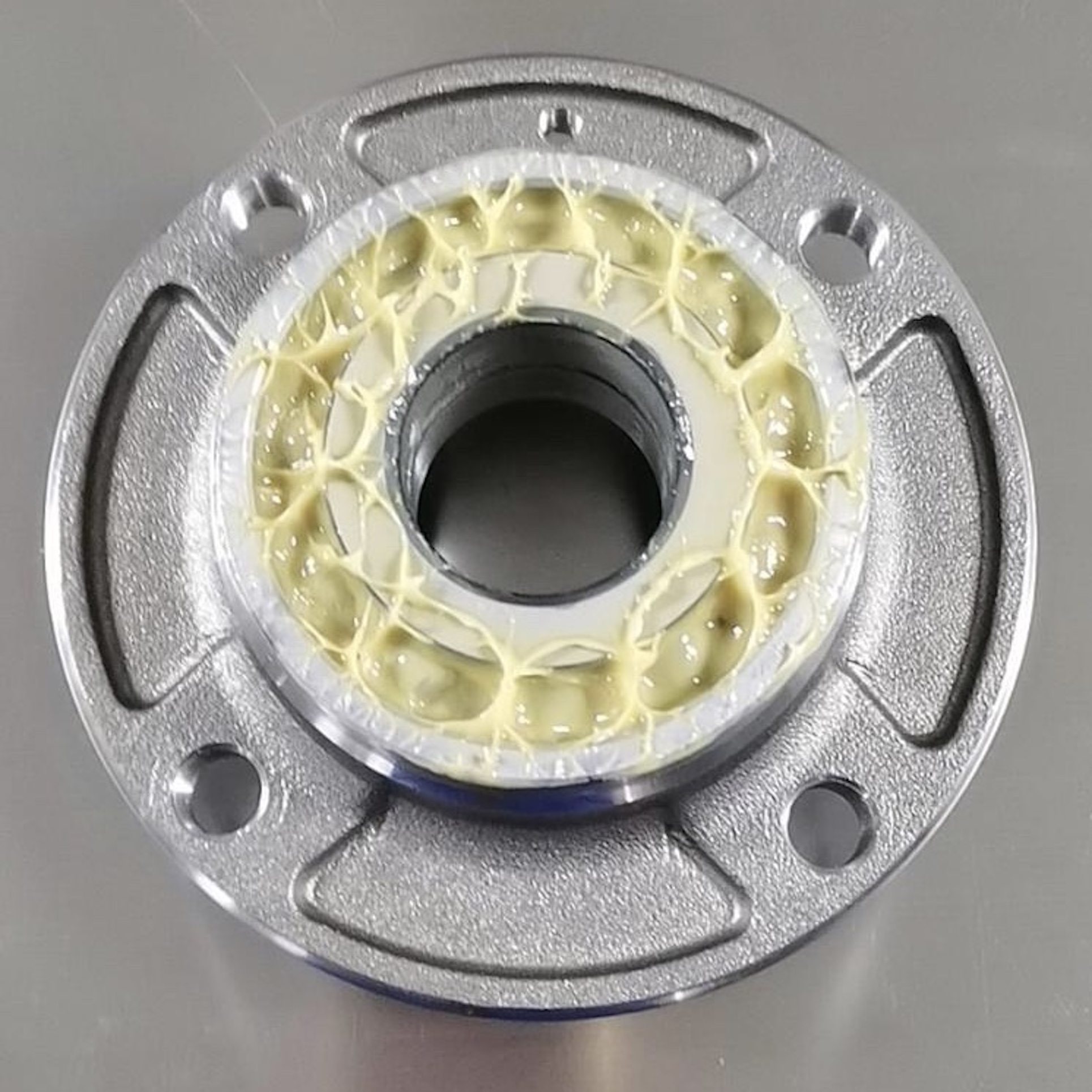
The Role and Limitations of Bearing Seals
How to prevent grease washout in bearings? This is a common challenge for many bearing users. Bearing seals and shields serve as critical barriers to protect the lubricating grease inside the bearings. They effectively prevent external contaminants from entering while keeping the grease from leaking out. However, different types of seals offer varying levels of protection:
- Non-Contact Shields:
These shields do not make contact with the inner ring, which means they do not increase starting or running torque. However, their sealing performance is limited, making them less effective in preventing grease from being washed away. - Contact Seals:
Made of nitrile rubber, contact seals (eg: 2RS, RS) provide a tight seal by making direct contact with the bearing’s inner ring, offering superior protection against contaminants. However, they increase friction torque, which can affect the bearing’s operational efficiency. Additional protective measures may be required in such cases. - Intermediate Solution: Non-Contact Seals:
Non-contact seals strike a balance between shields and contact seals. Made of nitrile rubber, they do not touch the inner ring, ensuring no impact on torque or maximum speed. These seals offer better protection than metal shields and are suitable for most standard applications.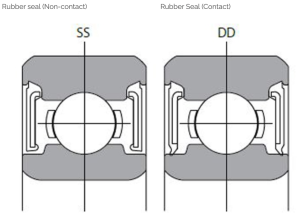
Professional Recommendations to Prevent Grease Washout
To achieve optimal protection against grease washout, consider the following strategies:
1. Choose the Right Lubricating Grease:
- High Water-Resistant Grease: Effectively resists water washout and maintains lubrication performance.
- Food-Grade Grease: Ideal for the food processing industry, capable of withstanding regular steam cleaning or chemical washing.
- PFPE Grease: Offers excellent chemical resistance, suitable for harsh environments.
2. Optimize the Sealing System:
- For high-speed, light-load applications, consider combining non-contact and contact seals.
- In heavy-load or high-contamination environments, use double-lip contact seals for enhanced protection.
3. Install Protective Devices:
- Add external protective covers around the bearing to reduce direct impact.
- Design drainage channels to prevent water accumulation and continuous exposure to the bearing.
4. Perform Regular Maintenance and Inspections:
- Check the condition of seals regularly for signs of wear.
- Monitor the state of the grease and replenish or replace it as needed.
By implementing these methods, the risk of grease washout can be significantly reduced, extending the lifespan of the bearings and ensuring stable equipment operation.
Contact Us:
If you have any questions about How to prevent grease washout in bearings, please don’t hesitate to contact us.
Questions buyers still ask while reviewing How to Prevent Grease Washout in Bearings
Which next options usually help after reviewing How to Prevent Grease Washout in Bearings?
Most buyers benefit from one broader family destination, one more commercial route, and one supporting guide that answers the next practical question. That combination usually turns research into a clearer shortlist.
Why add related bearing destinations beside How to Prevent Grease Washout in Bearings?
Because the first answer often leads to a second question about fit, applications, supplier choice, or repeat-order confidence. Keeping those next destinations close reduces unnecessary backtracking.
When is it worth moving from reading into a quote or product review?
That move usually makes sense once the topic has narrowed the likely bearing family and the remaining unknowns are commercial, dimensional, or application-specific rather than purely educational.
What usually makes the next bearing decision easier after How to Prevent Grease Washout in Bearings?
The process is often easier when the wider family view, the more commercial destination, and one practical guide stay visible together. That keeps the decision grounded in both application detail and buying reality.
Buyer FAQ
Questions buyers ask before choosing the next bearing option
What is the main takeaway from How to Prevent Grease Washout in Bearings?
The main takeaway is that how to prevent grease washout in bearings should be checked against the bearing family, dimensions, load direction, speed, and operating conditions instead of relying on the title or size alone.
When should I use this guide before requesting a quote?
Use the guide when you are comparing bearing models, checking suffix meanings, confirming seal or clearance choices, planning maintenance, or preparing details for replacement, production, or OEM sourcing.
How does this topic connect to bearing supply?
The topic supports the Bearing Supply decision path by helping buyers understand fit, performance, specification details, or maintenance factors before choosing a product page or contacting the team.
Can this guide replace a final specification check?
No. The guide helps prepare the decision, but a final check should still confirm the part number, dimensions, load, speed, seal, clearance, precision, application, and order quantity.
What should I send if I need help after reading this guide?
Send the bearing number, measured size, photos if available, application, quantity, and any special operating conditions. That gives the team enough context to recommend the right product family or quote route.
Need help checking fit, price, or lead time? Request a bearing quote