


How to Heat Up a Bearing
Why Do We Need to Heat Up a Bearing
When the inner diameter of a bearing is over 70mm, or when the interference is large, we usually heat up the bearing thermally to expand the bearing hole. The purpose is to save time and effort for installation and avoid bearing damage caused by excessive force.
Usually we heat the bearing to 80°C, and the highest is 100°C. Exceeding 120°C will cause the bearing to temper, which will reduce the hardness and accuracy of the ring.
Bearing Heating Up Methods:
1. Electric hot plate heating method
Place the bearing on a hot plate with a temperature of 100°C for a few minutes. This method is the easiest. Turning over several times can make the bearing heat evenly, and the efficiency is also high. This method can be used for large and small bearings.
2. Electric furnace heating method
The bearing is heated in a closed automatic temperature-controlled electric furnace. This method is characterized by uniform heating, accurate temperature control and fast heating. This heating method is suitable for heating many bearings in one batch.
3. Induction heating method
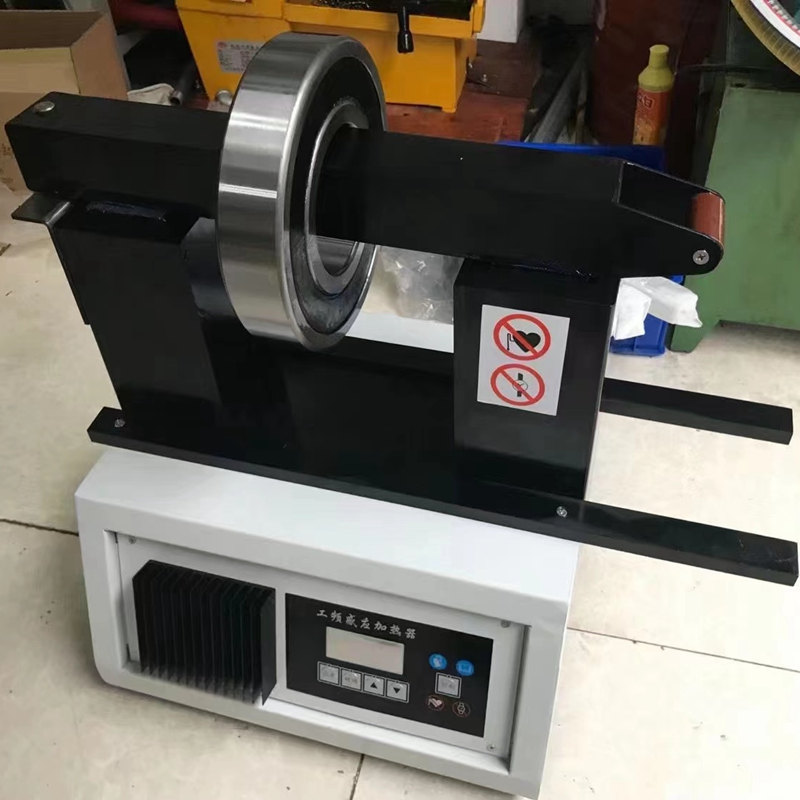
We use induction heaters to heat bearings to the desired temperature quickly, reliably and cleanly. This method is especially suitable for occasions where the inner ring is tightly fitted. Since only the inner ring is heated, and the outer ring is less heated, it can be easily installed on the shaft and into the seat hole.
4. Light bulb heating method
Using a 50W light bulb to heat the bearing can ensure that the heating temperature is around 100°C. Smaller bearings can be placed directly on the bulb. Larger bearings can be placed in the bulb’s conical cover, which prevents heat loss from the bulb and allows for even heating. The conical cover can be adjusted up and down, and it can adapt to heating bearings of different sizes within a certain range. This light bulb saves energy. The bulb heating method is suitable for occasions where the number of bearings is small and the bearing is not frequently heated. The light bulb can also be used for lighting at ordinary times, and no other equipment is required.
5. Oil tank heating method
This is the most widely used traditional heating method. A metal mesh is set at 50-70mm from the bottom of the oil tank, and the bearing is placed on the mesh. For large bearings, use hooks to hoist the large bearings. Bearings should not be placed directly on the bottom of the groove to prevent contact with the bottom of the groove.
Contact Us:
If you have any questions of How to Heat Up a Bearing, pls feel free to contact us. We will reply you wihtin 12 hours!
Questions that help before the next bearing decision after How to Heat Up a Bearing
Which next options usually help after reviewing How to Heat Up a Bearing?
Most buyers benefit from one broader family destination, one more commercial route, and one supporting guide that answers the next practical question. That combination usually turns research into a clearer shortlist.
Why add related bearing destinations beside How to Heat Up a Bearing?
Because the first answer often leads to a second question about fit, applications, supplier choice, or repeat-order confidence. Keeping those next destinations close reduces unnecessary backtracking.
When is it worth moving from reading into a quote or product review?
That move usually makes sense once the topic has narrowed the likely bearing family and the remaining unknowns are commercial, dimensional, or application-specific rather than purely educational.
What usually makes the next bearing decision easier after How to Heat Up a Bearing?
The process is often easier when the wider family view, the more commercial destination, and one practical guide stay visible together. That keeps the decision grounded in both application detail and buying reality.
Buyer FAQ
Questions buyers ask before choosing the next bearing option
What is the main takeaway from How to Heat Up a Bearing?
The main takeaway is that how to heat up a bearing should be checked against the bearing family, dimensions, load direction, speed, and operating conditions instead of relying on the title or size alone.
When should I use this guide before requesting a quote?
Use the guide when you are comparing bearing models, checking suffix meanings, confirming seal or clearance choices, planning maintenance, or preparing details for replacement, production, or OEM sourcing.
How does this topic connect to bearing supply?
The topic supports the Bearing Supply decision path by helping buyers understand fit, performance, specification details, or maintenance factors before choosing a product page or contacting the team.
Can this guide replace a final specification check?
No. The guide helps prepare the decision, but a final check should still confirm the part number, dimensions, load, speed, seal, clearance, precision, application, and order quantity.
What should I send if I need help after reading this guide?
Send the bearing number, measured size, photos if available, application, quantity, and any special operating conditions. That gives the team enough context to recommend the right product family or quote route.
Need help checking fit, price, or lead time? Request a bearing quote