


How to Prevent Bearing Rust
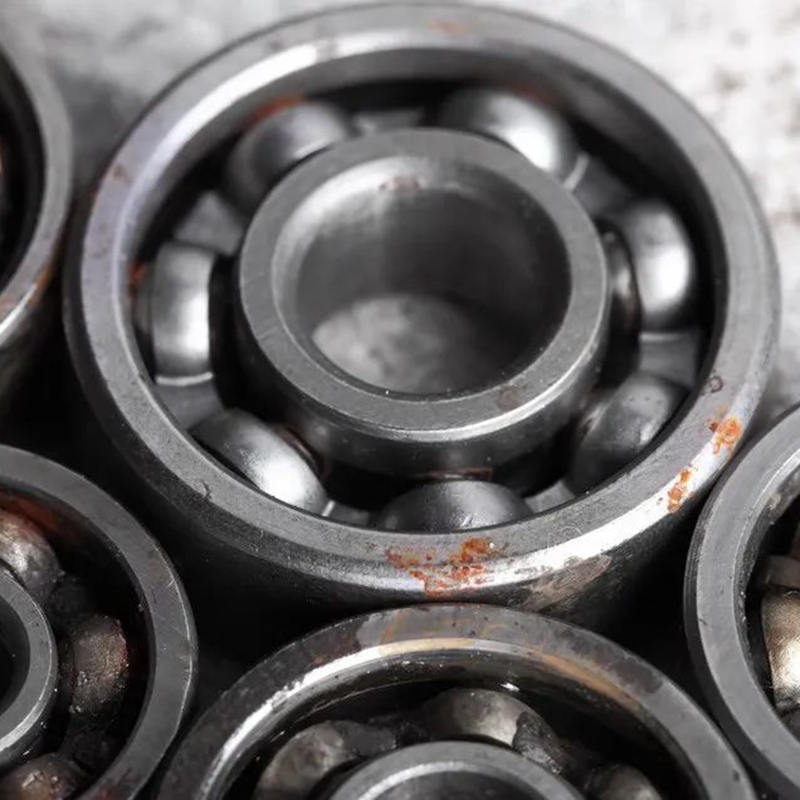
Bearing Rust Reason:
Bearing rust has relationship to the material and use environment.
The bearing steel itself contains carbon and will react with water vapor.
If we want to prevent the bearing from rusting, we must do a good job of anti-rust treatment or choose non-steel bearings.
Metal products are prone to rust after oxidation, and stainless steel bearings are no exception.
There are many factors that affect its rust: such as the chemical composition and structure of the metal material itself; the surface finish (corrosion of the battery with poor oxygen concentration); the composition and pH value of the solution in contact with the metal surface; and many factors such as the environment in which it is located.
Above are the direct factors that make the bearing rusty.
In addition, when we use the bearing, do not directly touch objects with your hands, because when sweat contacts the bearing, it will form a layer of sweat film on the bearing surface, which will cause electrochemical effects on the bearing and corrode the bearing.
Will Bearings Made of GCr15 Rust in an Outdoor Environment?
Yes, and it will rust very much like ordinary steel. The Cr content of Gcr15 steel is too small.
The Cr content of GCr15 is only about 1.5% (The value behind the bearing steel is the Cr content, and the unit is one thousandth).
If the Cr content is close to the 13% boundary, the anti-rust effect will be better.
For example, Cr12 (containing about 12% Cr) steel will basically not rust.
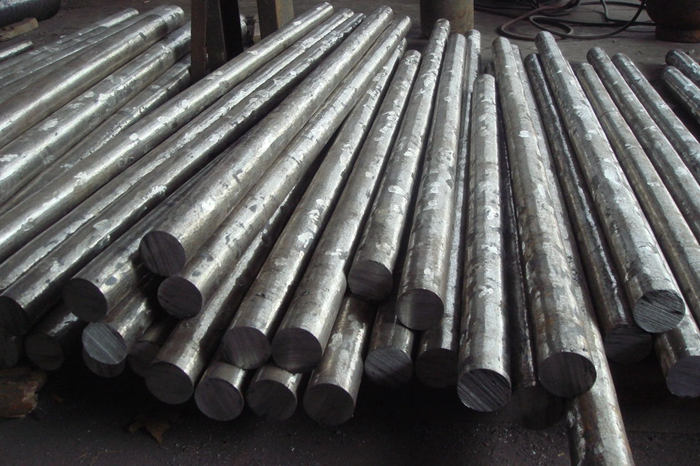
Cr12 steel
Methods to Prevent Bearing Rust
1. Surface cleaning method:
Common surface cleaning methods are solvent cleaning method, chemical treatment cleaning method and mechanical cleaning method.
When the surface is dry and clean, it can be dried with filtered dry compressed air, or dried with a dryer at 120~170℃, or dried with clean gauze.
2. Method of applying anti-rust oil
(1) Soaking method:
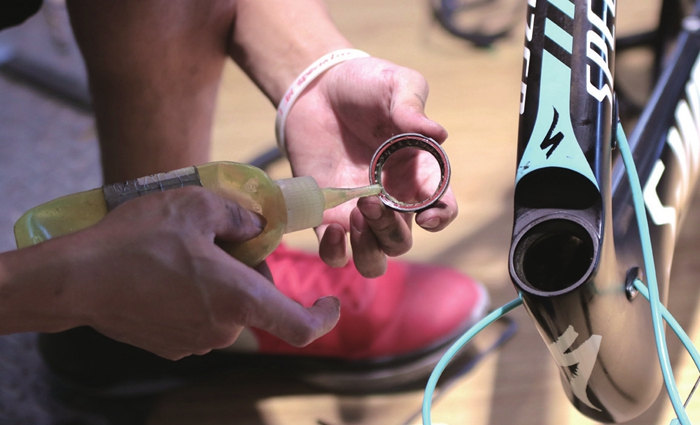
Some small bearings are immersed in anti-rust grease to make the surface adhere to a layer of anti-rust oil/grease. The thickness of the oil film can be achieved by controlling the temperature or viscosity of the anti-rust grease.
(2) Brushing method:
This method is suitable for large bearings that are not suitable for immersion or spraying. When brushing, it is necessary to pay attention not to accumulate, but also to prevent leakage.
(3) Spray method:
Some large bearings cannot be oiled by immersion method. Generally, use filtered compressed air with a pressure of about 0.7Mpa for spraying in a clean air place.
Questions that usually come up after How to Prevent Bearing Rust
Which next options usually help after reviewing How to Prevent Bearing Rust?
Most buyers benefit from one broader family destination, one more commercial route, and one supporting guide that answers the next practical question. That combination usually turns research into a clearer shortlist.
Why add related bearing destinations beside How to Prevent Bearing Rust?
Because the first answer often leads to a second question about fit, applications, supplier choice, or repeat-order confidence. Keeping those next destinations close reduces unnecessary backtracking.
When is it worth moving from reading into a quote or product review?
That move usually makes sense once the topic has narrowed the likely bearing family and the remaining unknowns are commercial, dimensional, or application-specific rather than purely educational.
What usually makes the next bearing decision easier after How to Prevent Bearing Rust?
The process is often easier when the wider family view, the more commercial destination, and one practical guide stay visible together. That keeps the decision grounded in both application detail and buying reality.
Buyer FAQ
Questions buyers ask before choosing the next bearing option
What is the main takeaway from How to Prevent Bearing Rust?
The main takeaway is that how to prevent bearing rust should be checked against the bearing family, dimensions, load direction, speed, and operating conditions instead of relying on the title or size alone.
When should I use this guide before requesting a quote?
Use the guide when you are comparing bearing models, checking suffix meanings, confirming seal or clearance choices, planning maintenance, or preparing details for replacement, production, or OEM sourcing.
How does this topic connect to bearing supply?
The topic supports the Bearing Supply decision path by helping buyers understand fit, performance, specification details, or maintenance factors before choosing a product page or contacting the team.
Can this guide replace a final specification check?
No. The guide helps prepare the decision, but a final check should still confirm the part number, dimensions, load, speed, seal, clearance, precision, application, and order quantity.
What should I send if I need help after reading this guide?
Send the bearing number, measured size, photos if available, application, quantity, and any special operating conditions. That gives the team enough context to recommend the right product family or quote route.
Need help checking fit, price, or lead time? Request a bearing quote