


Bearing Overheating: Causes, Diagnosis and Emergency Tips
Introduction:
Bearing overheating is a common problem in industrial machinery, motors, pumps, gearboxes, conveyors, and other rotating equipment. If not handled correctly, an overheated bearing can quickly lead to bearing seizure, shaft damage, motor failure, or even complete machine shutdown.
One mistake often made on site is cooling a hot bearing with water or strong cold air. This may seem like a quick solution, but it can actually make the damage worse. When bearing steel is heated, it expands. If it is cooled suddenly, the rapid temperature change may create thermal stress and cause the bearing rings to crack.
So, what should you do when a bearing becomes extremely hot or starts smoking? This guide explains how to identify bearings overheating, the main causes behind it, and the correct emergency steps to take.
How to Diagnose Bearing Overheating on Site?
In many cases, bearings overheating can be detected during routine inspection before serious damage occurs. Even without advanced testing equipment, operators can make a quick judgment by checking the temperature, grease condition, and running noise.
1. Check the Bearing Temperature
A simple way to check abnormal heating is to briefly touch the bearing housing with the back of your hand.
If the housing is too hot to touch for more than a few seconds, the bearing temperature may already be above the normal operating range. In many applications, a housing temperature above around 70°C should be treated as a warning sign.
For a safer and more accurate inspection, it is better to use an infrared thermometer, temperature gun, or installed temperature sensor.
2. Check the Lubricating Grease
Lubrication condition is one of the most important indicators of bearing health.
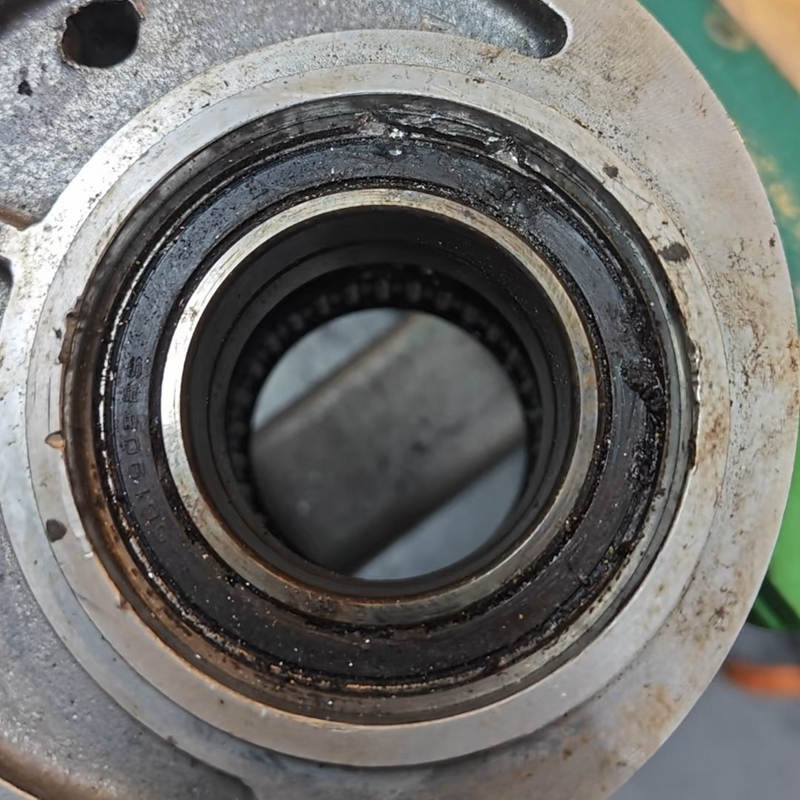
Check the grease around the bearing housing, inspection port, or seal area. If the grease has turned black, become thin and runny, or has a burnt smell, it usually means the bearing has been running at an excessively high temperature.
Overheated grease loses its lubricating ability. Once the oil film breaks down, metal-to-metal contact may occur between the rolling elements and raceways, causing friction, wear, and further temperature rise.
3. Listen for Abnormal Bearing Noise
Abnormal noise is another clear sign of bearing trouble.
Use a listening rod, mechanical stethoscope, or even a screwdriver placed against the bearing housing. A healthy bearing usually produces a smooth and steady running sound.
If you hear sharp squealing, metallic friction, grinding, or continuous dry running noise, the bearing may have lost lubrication or may already be close to seizure.
Five Common Causes of Overheating:
Bearing overheating does not happen without reason. In most cases, the problem is related to lubrication, installation, clearance, preload, sealing, or loading conditions.
1. Insufficient or Failed Lubrication
Poor lubrication is one of the most common causes of bearings overheating.
If there is not enough grease or oil inside the bearing, the rolling elements and raceways cannot form a proper lubricating film. This leads to dry friction, high temperature, and rapid wear.
However, too much grease can also cause overheating. Excessive grease increases churning resistance, especially at high speed. This creates additional heat inside the bearing housing.
Common lubrication problems include:
- Too little grease or oil
- Too much grease
- Wrong lubricant type
- Contaminated grease
- Aged or oxidized lubricant
- Lubricant viscosity not suitable for the operating speed or temperature
Regular lubrication maintenance is essential for preventing bearing overheating and extending bearing service life.
2. Incorrect Fit and Insufficient Bearing Clearance
Bearing clearance is critical for stable operation.
If the fit between the shaft and bearing inner ring is too tight, or the fit between the outer ring and housing bore is incorrect, the internal clearance of the bearing may become too small.
During operation, heat causes the shaft and bearing components to expand. If the bearing clearance is already limited, it may disappear completely after thermal expansion. When this happens, the rolling elements become squeezed, friction increases sharply, and the bearing temperature rises quickly.
This problem is especially common in:
- High-speed machinery
- Heavy-load equipment
- Motors and pumps
- Gearboxes
- Applications with tight interference fits
Choosing the correct fit tolerance and bearing clearance can prevent premature bearing failure.
3. Excessive Preload
Some bearings, such as angular contact ball bearings and tapered roller bearings, require preload during installation.
Proper preload improves rigidity and running accuracy. However, excessive preload increases contact stress and friction torque. As a result, the bearing runs hotter and may suffer from premature wear or burn damage.
Signs of excessive preload may include:
- Rapid temperature rise after startup
- High running torque
- Abnormal noise
- Grease discoloration
- Raceway damage after short operation time
Preload should always be adjusted according to bearing type, machine design, speed, and load requirements.
4. Seal Friction or Seal Interference
Seals are often overlooked when diagnosing bearing overheating. If the seal lip is dry, damaged, poorly lubricated, or installed with too much interference against the shaft, friction can occur at the contact surface. This local friction may produce heat and transfer it to the bearing area.
Seal-related overheating may be caused by:
- Dry seal lip
- Incorrect seal installation
- Seal deformation
- Excessive contact pressure
- Shaft surface roughness
- Misalignment between seal and shaft
When checking an overheated bearing, always inspect the sealing system as well.
5. Misalignment and Concentrated Load
Bearing misalignment or uneven loading can also lead to overheating.
If the shaft is bent, the housing is not aligned, or the installation surface is uneven, the bearing load will not be distributed evenly. Some rolling elements may carry excessive load, while others carry little or no load.
This concentrated load increases local stress, friction, and temperature. Over time, it may cause raceway peeling, cage damage, vibration, and bearing failure.
Common causes include:
- Shaft bending
- Poor coupling alignment
- Housing deformation
- Incorrect mounting
- Uneven foundation
- External force on the shaft
- Overload or impact load
Proper alignment and load control are important for preventing bearings from overheating.
What to Do When a Bearing Overheats?
When bearing overheating is confirmed, the correct response is very important. Improper emergency handling can turn a repairable fault into serious equipment damage.
Step 1: Stop the Machine Immediately
The first action should be to stop the equipment and cut off the power supply.
Continuing to run an overheated bearing may cause: bearing seizure, shaft scoring, motor overload, cage fracture, raceways burning, etc.
Stopping the machine early can reduce repair costs and prevent secondary damage.
Step 2: Let the Bearing Cool Naturally
Allow the bearing and bearing housing to cool down naturally.
Do not disassemble the bearing immediately while it is still extremely hot, unless required by site safety procedures. Sudden handling or forced cooling may increase the risk of cracking or deformation.
Step 3: Do Not Pour Water on the Bearing
Never pour water on a hot bearing.
Rapid cooling can create severe thermal stress inside the bearing steel. This may cause the inner ring, outer ring, or rolling elements to crack. In serious cases, the bearing may break suddenly.
Water can also enter the bearing housing and contaminate the lubricant, creating additional corrosion and lubrication failure.
Step 4: Avoid Strong Cold Air Cooling
Strong cold air is also not recommended.
Although it may not look as aggressive as water cooling, it can still cool the bearing unevenly. Uneven cooling between the inner ring, outer ring, and rolling elements may lead to thermal stress and dimensional changes.
Natural cooling is usually the safest option.
Step 5: Inspect the Bearing After Cooling
After the bearing has cooled, inspect it carefully and find the root cause.
A practical inspection sequence is:
- Check the lubrication condition
- Check for grease contamination or deterioration
- Inspect bearing clearance
- Check shaft and housing fit
- Review preload setting
- Inspect seals and seal contact areas
- Check alignment and loading condition
- Look for discoloration, cracks, peeling, scoring, or cage damage
If the bearing shows signs of serious overheating, such as blue or black discoloration, burnt grease, cracked rings, seized rolling elements, or damaged raceways, bearing replacement is usually necessary.
Conclusion:
Bearings overheating is a warning sign that should never be ignored. Common causes include poor lubrication, incorrect fit, insufficient clearance, excessive preload, seal friction, and misalignment.
If a bearing becomes very hot or starts smoking, do not cool it with water or strong cold air. The correct emergency method is to stop the machine, cut off the power, let the bearing cool naturally, and then inspect the cause step by step.
With proper diagnosis, correct maintenance, and timely action, bearings overheating can often be prevented before it leads to costly machine failure.