


Blog
Common Bearing Problems and Solutions
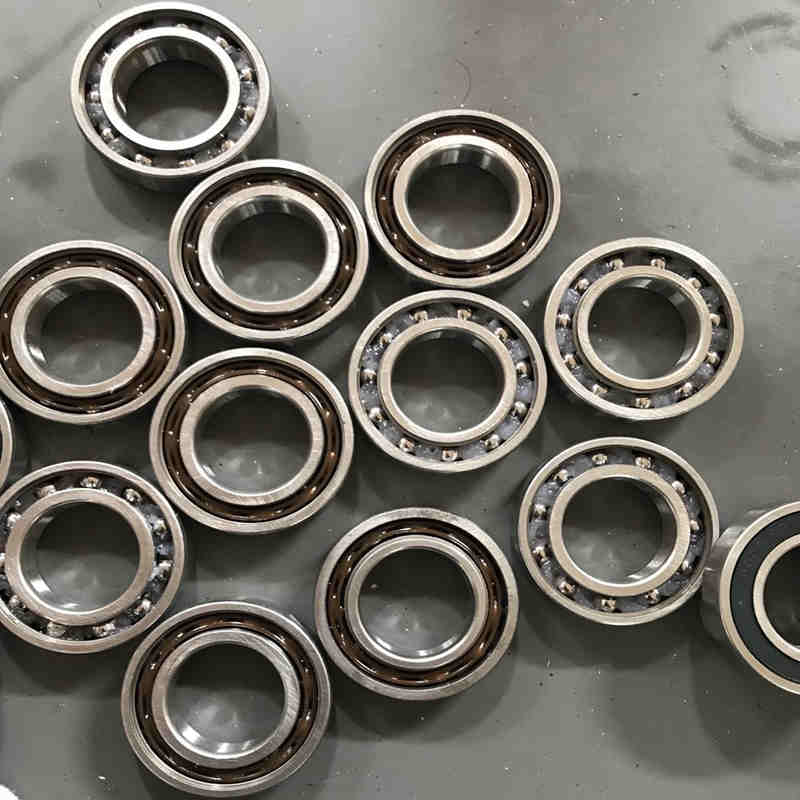
If bearings do not run normally, they will havemany symptoms, which can be roughly divided into seven symptoms as below:
A: overheating;
B: loud noise;
C: vibration;
D : The mechanical performance is not satisfactory;
E: The bearing is loose on the shaft.
F: Replacement frequency is high
G: Shaft is difficult to rotate
Reasons of Overheating-Bearing Problems and Solutions
1. Lubricating grease or oil is invalid or incorrect.
Solution: Select the correct grease or oil, and check the compatibility of the grease or oil.
2. The oil level is too low, therefore lubricant is lost from the oil seal, and the grease in the bearing box is insufficient.
Solution: The oil level should be slightly lower than the center of the bottom rolling element, and grease in the bearing box should fill about 1/3 to 1/2 of the space.
3. The oil level is too high or the bearing box grease is completely filled, which will cause the lubricant to be stirred sufficiently and cause high temperature or oil leakage.
Solution: Add grease to the tank to 1/2; if the oil is lubricated, the oil level is slightly lower than the center of the lowest rolling element.
4. Inappropriate bearing clearance. When there is heat flow through the shaft, the inner ring will expand excessively.
Solution: Check if the clearance of the overheated bearing is within the original design range. If it is, please change to a larger clearance to C3 or C4.
Reasons of Loud Noise- Bearing Problems and Solutions
1. Outer ring and bearing housing are twisted, and the shaft and inner ring are twisted. The reason is that the rounded corners of the box hole are too largeand the support is not enough. The shoulder fillet is too large, as a result, there is insufficient support, and the two ends are not reliable.
Solution: Amend the fillet of the box hole and the shoulder.
2. Incorrect installation method, for example, hitting the bearing with a hammerdirectly, as a result, there will be knocks on bearing surface.
Solution: Choose the correct installation method: sleeve method, heating method, oil pressure method, etc.
3. The locking washer of the fixed washer rubs against the bearing.
Solution: knock down the locking washer or replace it with a new one.
4. The rotating parts in the equipment interfere with the stationary parts.
Solution: Check carefully to avoid interference.
5. Excessive bearing clearance causes vibration.
Solution: Check the balance correction of equipment rotating parts.
Reasons of Vibration-Bearing Problems and Solutions
1. Dirt, foreign matter, sand or other pollutants enter the box.
Solution: Clean the bearing box and replace the new oil seal.
2. Water, acid, paint or other corrosive substances enter the bearing box.
Solution: Install a protective dust cover and improve the oil seal.
3. The inner hole of the bearing box is not round, twisted and deformed, and the supporting surface is not flat.
Solution: Check the bearing box, adjust the supporting surface, and adjust the gasket.
4. The shaft diameter is small or the adapter sleeve is not locked.
Solution: Check the shaft diameter, select the appropriate amount of fit, and re-tighten the adapter sleeve.
5. Unbalanced load, large box hole clearance, and outer ring slips in the box hole.
Solution: Replace the bearing box with the bore diameter that meets the design requirements.
6. Two or more bearings are coupled to produce axis linear deviation and angular deviation.
Solution: Re-adjust the gasket so that the shaft is coupled on the same straight line.
7. Incorrect installation, hit the bearing directly with a hammer.
8. Bearingoil clearance is too large.
9. Equipment vibration
Reasons of Mechanical Performance is not Satisfactory
1. Bearing internal clearance is inappropriate, and the bearing pre-tightening force is not enough, therefore, you should choose a suitable bearing.
2.The debris and dirt in the bearing box is notcleaned up, or the dirt, water, and acidic pollutants have entered the box during operation.
3. The adapter sleeve is too tight or not tight.
4. The bore diameter of the bearing box is not high, and the box hole is deformed and twisted.
5. The shaft diameter is too small, and the shaft shoulder size does not match, which interferes with the bearing.
6. The internal clearance of the bearing is too small due to excessive shaft diameter or box hole.
7. Multiple bearings are coupled, resulting in misalignment
Reasons of Bearing Loose on Shaft-Bearing Problems and Solutions
1. The shaft diameter is small, and the bearing inner hole is large.
2. Insufficient interference.
3. The adapter sleeve is not locked enough.
Reasons of Difficulty of shaft rotation
1. Lubrication failure, oil level, bearing clearance selection.
2. Cleanliness, debris.
3. Friction: oil seal, shaft shoulder and seal, anti-loosening sheet (sun sheet).
4. The concentricity of the shaft is not right, and the axial jam caused by cross positioning.
5. Bearing box has low accuracy and distortion
Links: SKF Bearing, FAG Bearing
Questions that usually come up after Common Bearing Problems and Solutions
Which next options usually help after reviewing Common Bearing Problems and Solutions?
Most buyers benefit from one broader family destination, one more commercial route, and one supporting guide that answers the next practical question. That combination usually turns research into a clearer shortlist.
Why add related bearing destinations beside Common Bearing Problems and Solutions?
Because the first answer often leads to a second question about fit, applications, supplier choice, or repeat-order confidence. Keeping those next destinations close reduces unnecessary backtracking.
When is it worth moving from reading into a quote or product review?
That move usually makes sense once the topic has narrowed the likely bearing family and the remaining unknowns are commercial, dimensional, or application-specific rather than purely educational.
What usually makes the next bearing decision easier after Common Bearing Problems and Solutions?
The process is often easier when the wider family view, the more commercial destination, and one practical guide stay visible together. That keeps the decision grounded in both application detail and buying reality.
Buyer FAQ
Questions buyers ask before choosing the next bearing option
What is the main takeaway from Common Bearing Problems and Solutions?
The main takeaway is that common bearing problems and solutions should be checked against the bearing family, dimensions, load direction, speed, and operating conditions instead of relying on the title or size alone.
When should I use this guide before requesting a quote?
Use the guide when you are comparing bearing models, checking suffix meanings, confirming seal or clearance choices, planning maintenance, or preparing details for replacement, production, or OEM sourcing.
How does this topic connect to bearing supply?
The topic supports the Bearing Supply decision path by helping buyers understand fit, performance, specification details, or maintenance factors before choosing a product page or contacting the team.
Can this guide replace a final specification check?
No. The guide helps prepare the decision, but a final check should still confirm the part number, dimensions, load, speed, seal, clearance, precision, application, and order quantity.
What should I send if I need help after reading this guide?
Send the bearing number, measured size, photos if available, application, quantity, and any special operating conditions. That gives the team enough context to recommend the right product family or quote route.
Need help checking fit, price, or lead time? Request a bearing quote